








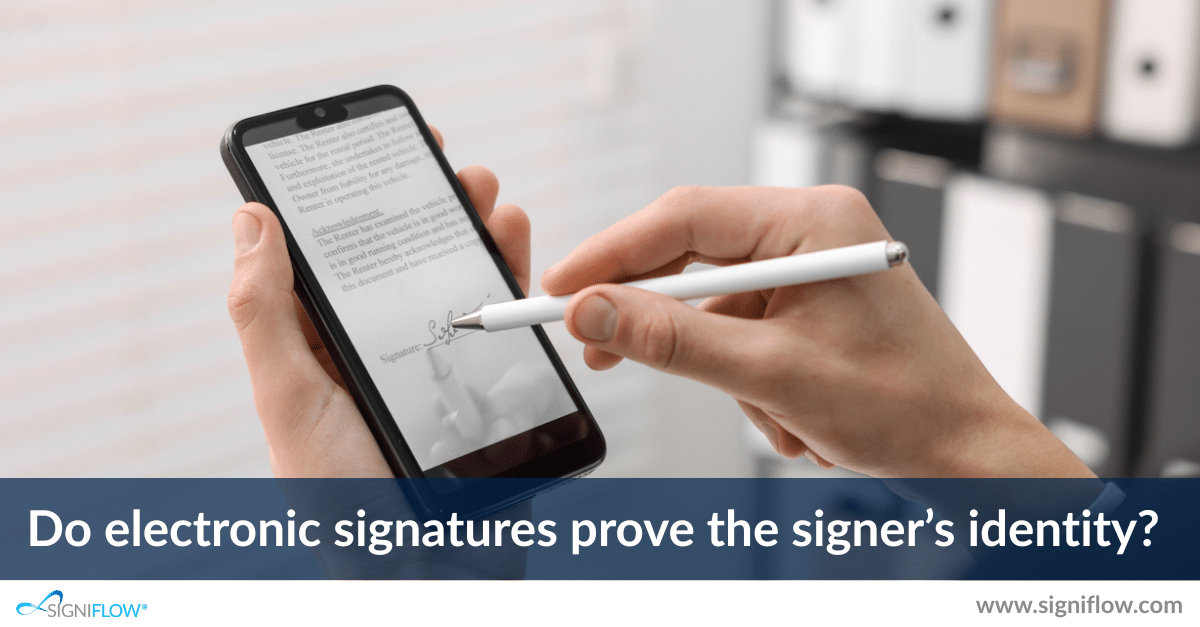
Do electronic signatures prove the signer’s identity?
Electronic signatures are widely trusted in modern business, but electronic signatures and signer identity do not always go hand-in-hand. Electronic signatures confirm that something was signed, while signer identity is about who actually signed it. Electronic signatures create confidence in the process, yet signer identity is what determines trust in the person. Electronic signatures can validate documents, but signer identity can still be uncertain. And when electronic signatures are accepted without verifying signer identity, organisations may be relying on assumption instead of proof.
As more transactions move online, electronic signatures are used daily across industries, but signer identity is not always verified as part of the process. This creates a growing concern, especially in environments where trust, compliance, and accountability matter.
Electronic signatures vs signer identity
Electronic signatures are designed to ensure that a document has not been altered and that a signing event took place. They provide structure, timestamps, and a clear audit trail. However, signer identity is not always built into that validation.
In many cases, electronic signatures confirm that an action occurred, but signer identity is assumed based on access or credentials. If those credentials are shared or compromised, electronic signatures will still be completed, even if signer identity is incorrect.
This is where the distinction becomes critical. Electronic signatures prove activity. Signer identity proves the person.
Why electronic signatures do not always guarantee signer identity
There is a common belief that electronic signatures inherently verify signer identity. In reality, electronic signatures rely on the context around them, such as email access, login credentials, or device control.
If someone else gains access to these, electronic signatures can be applied without confirming signer identity. This means a document can appear fully valid while the actual signer identity remains unknown.
As digital processes become more common, this gap between electronic signatures and signer identity becomes more significant.
The risk of relying on electronic signatures without verifying signer identity
When organisations rely on electronic signatures without confirming signer identity, they introduce a level of risk that is often hidden until something goes wrong.
A contract may be disputed. An approval may be questioned. A transaction may be flagged during an audit. In each of these scenarios, electronic signatures alone are not enough. The focus shifts immediately to signer identity.
If signer identity cannot be proven, electronic signatures lose their strength as evidence. This can lead to legal exposure, compliance challenges, and reputational risk.
What organisations often misunderstand about electronic signatures and signer identity
One of the biggest misconceptions is that audit trails and system records are enough to prove signer identity. While these support electronic signatures, they do not always confirm who the signer actually was.
Audit trails can show when electronic signatures were applied and from where, but signer identity is still not guaranteed. They reflect actions within a system, not the human behind those actions.
This misunderstanding creates a false sense of security, where electronic signatures appear reliable, but signer identity is not truly verified.


The growing importance of proving signer identity in electronic signatures
As fraud becomes more sophisticated and digital interactions increase, signer identity is becoming a central requirement in electronic signature processes.
Organisations are being asked not only to show that electronic signatures were completed, but also to prove signer identity with confidence. This is especially important in regulated industries where accountability and traceability are critical.
The question is no longer whether electronic signatures were used. It is whether signer identity can be proven beyond doubt.
How SigniFlow strengthens electronic signatures with verified signer identity
To address this challenge, electronic signatures need to evolve to include real-time verification of signer identity.
This is where SigniFlow, with FaceSign, introduces a more advanced approach. Instead of relying solely on electronic signatures, FaceSign adds a layer of identity verification through selfie-based liveness detection during the signing process.
This ensures that signer identity is confirmed in real time by verifying that:
- The person is physically present
- The person is real and not a static image or manipulated input
- The signer identity is directly linked to the electronic signatures event
Within SigniFlow, this happens seamlessly as part of the workflow, meaning electronic signatures and signer identity are connected in a single, secure process.
This reduces the risk of impersonation, strengthens compliance, and provides clear evidence of signer identity when it matters most.
Because in the end, electronic signatures alone are not enough, signer identity is what turns a signed document into a trusted transaction.
Book a demo here