







Australia’s Tranche 2 compliance requirements: What businesses need to know
Australia’s regulatory landscape is changing, and organisations across legal, accounting, property, and professional services sectors are preparing for Tranche 2 compliance requirements. As the Anti-Money Laundering and Counter-Terrorism Financing (AML/CTF) reforms expand to new industries across Australia, businesses will need stronger customer due diligence processes, reliable identity verification, robust record keeping, and effective risk management controls to support compliance. As Australia prepares for Tranche 2 compliance, organisations should begin reviewing their compliance processes to ensure they are ready for the new regulatory landscape.
For many organisations, these changes will affect more than their compliance processes. They will change how customers are onboarded, how identities are verified, and how trust is established before business relationships begin.
The good news is that modern eKYC & AML compliance solutions can help businesses across Australia meet these new compliance requirements while creating a secure, efficient, and seamless customer experience.
A practical example: What Tranche 2 compliance could look like
Imagine a law firm assisting a client with the purchase of a commercial property.
The client lives interstate, settlement is approaching, and several parties are involved. Before the transaction can move forward, the firm must be confident that the client is who they claim to be, understand any potential compliance risks, and maintain records that demonstrate appropriate customer due diligence has been completed.
Traditionally, this process might involve certified copies of identity documents, lengthy email exchanges, manual compliance checks, and paper-based record keeping. It works, but it is time-consuming for both the client and the legal team.
With an eKYC & AML compliance solution, the experience becomes far simpler.
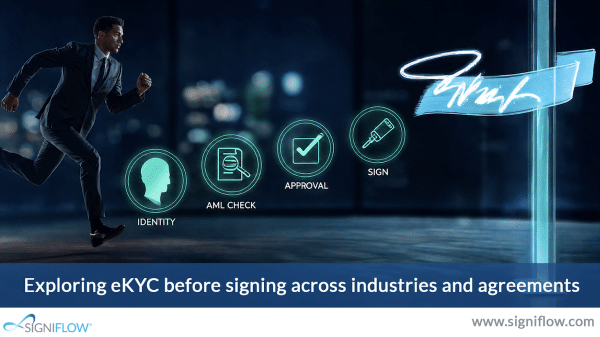
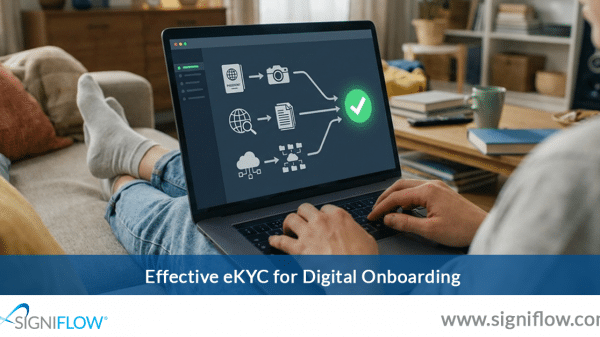
The client receives a secure link and completes an eKYC process that includes identity document verification, biometric authentication, and 3D liveness detection. Identity information is then validated against trusted data sources where available, while customer due diligence and AML screening take place as part of the onboarding journey.
Within minutes, the law firm has greater confidence in the client’s identity, a complete audit trail, and the compliance records needed to support its regulatory obligations.
While this example focuses on a legal practice, the same challenge applies to accountants, conveyancers, real estate professionals, trust and company service providers, and many other organisations that will be impacted by Australia’s Tranche 2 reforms.
Understanding Australia’s Tranche 2 compliance requirements
For organisations newly captured by the reforms, the biggest change is that customer identification and compliance can no longer rely on manual processes alone.
Australia’s AML/CTF framework has historically focused on financial institutions and businesses that provide designated financial services. The Tranche 2 reforms extend these obligations to additional sectors that may be vulnerable to money laundering, terrorism financing, and other forms of financial crime.
Once implemented, affected organisations will need to identify customers, conduct customer due diligence, maintain compliance records, assess risk, and establish processes that support ongoing regulatory obligations.
For many businesses, Tranche 2 compliance represents a significant shift from traditional onboarding processes to more structured, auditable, and technology-driven compliance frameworks.


The four key requirements for Tranche 2 compliance
While specific obligations will vary depending on the services provided, most affected organisations can expect requirements in four key areas.
Identity verification
Businesses must establish confidence that customers are who they claim to be before providing designated services. This requires reliable identity verification processes that use trusted and independent sources.
Customer due diligence
Customer Due Diligence (CDD) involves understanding who customers are, assessing risk, and determining whether enhanced verification measures are required. Effective customer due diligence is central to Tranche 2 compliance.
AML screening
Organisations must assess potential financial crime risks by screening individuals against sanctions lists, Politically Exposed Persons (PEP), Prominent Influential Persons (PIP), and other relevant watchlists.
Record keeping and auditability
Businesses must maintain auditable records of identity verification, customer due diligence, compliance screening, consent, and risk assessments. These records help demonstrate compliance during reviews and investigations.
Why eKYC & AML compliance is becoming essential for Tranche 2 compliance
For many organisations, preparing for Tranche 2 compliance starts with answering a simple question: Can you confidently prove who your customers are and demonstrate that appropriate customer due diligence has taken place?
This is where eKYC & AML compliance can play an important role. Modern eKYC & AML compliance solutions combine identity verification, customer due diligence, AML screening, consent management, and audit-ready reporting into a single digital process. By validating identities, assessing risk, and maintaining auditable compliance records, organisations can create trusted customer relationships from the very first interaction.
Key capabilities typically include:
- Identity document verification
- Facial biometric matching
- 3D liveness detection
- Customer due diligence
- Trusted identity validation
- AML screening
- Compliance reporting
- Audit-ready records
Together, these capabilities help organisations reduce fraud, improve onboarding efficiency, and support Tranche 2 compliance requirements.
Preparing for the future of Tranche 2 compliance
The Tranche 2 reforms highlight the growing importance of trusted digital identity, customer due diligence, eKYC, AML screening, and risk-based compliance processes.
Preparing for Tranche 2 compliance is about more than meeting new regulatory requirements. It is an opportunity to strengthen customer onboarding, reduce operational complexity, and build trusted customer relationships through secure, auditable compliance processes. Organisations that invest in eKYC & AML compliance solutions today will be better positioned to meet future regulatory requirements while creating trusted customer journeys.
Discover how SigniFlow’s eKYC & AML Compliance solution can help your organisation accelerate onboarding, strengthen customer due diligence, and prepare for Tranche 2 compliance with confidence.