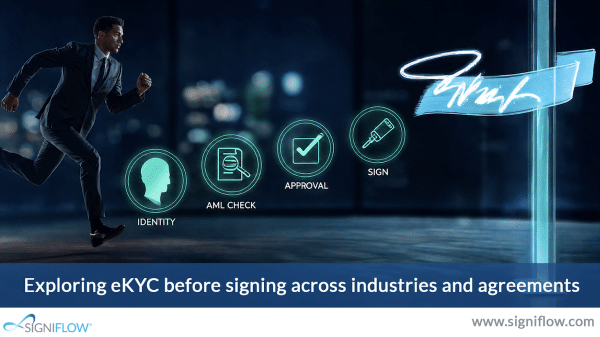






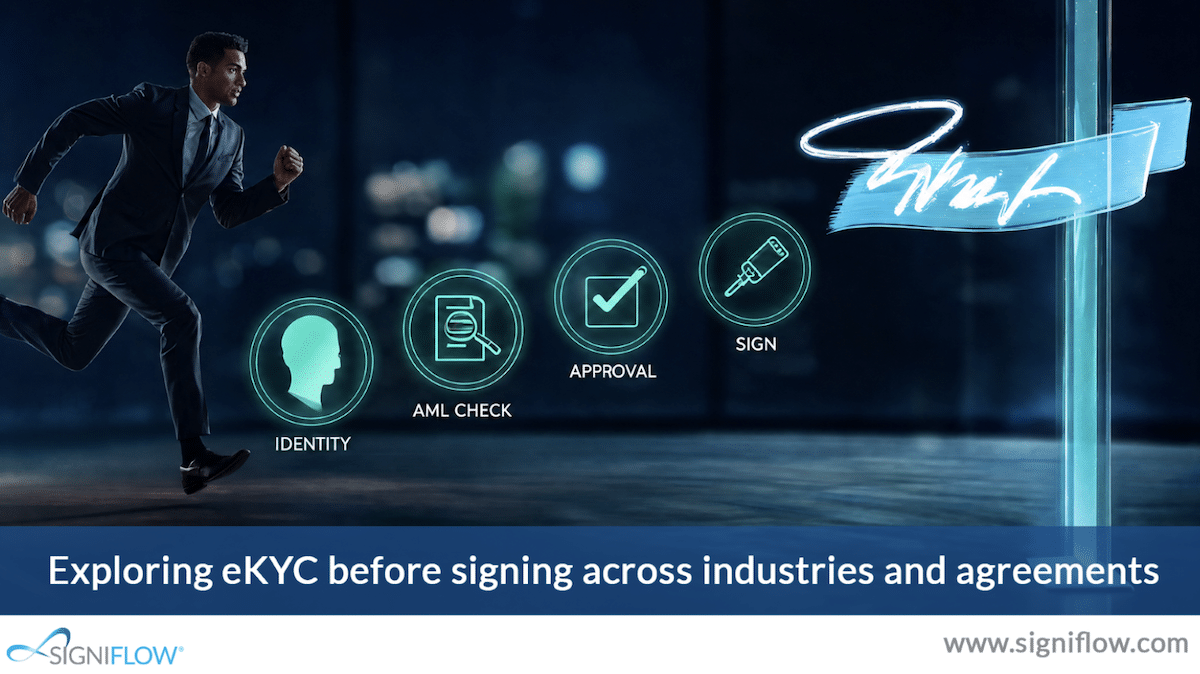
Exploring eKYC before signing across industries and agreements
A signature may be the final step in a transaction, but the real risk often exists before anything is signed. eKYC matters because organisations need confidence in who they are dealing with before a commitment becomes binding. eKYC brings identity checks closer to that decision point. eKYC strengthens the information available before signing. eKYC can support relevant anti-money laundering checks. Most importantly, eKYC helps organisations ask the right questions before an agreement moves forward.
Why certainty before signing matters
A signed document can authorise a financial commitment, transfer rights or establish a professional relationship. That is why eKYC should not be viewed as another digital hurdle. Its purpose is to reduce uncertainty where uncertainty can become costly, difficult to reverse or expose an organisation to fraud and regulatory risk. The goal is not more friction. It is greater confidence before the consequences of signing begin.
The better question is not simply, “Can we verify this person?” It is, “Why should we verify them here?” eKYC delivers value when checks reflect the risk of the transaction, applicable requirements and the organisation’s processes. Not every agreement needs the same scrutiny, and some results may require clarification or escalation. What matters is defining what should happen before a document proceeds.
How identity and AML checks support better decisions
Identity sits at the centre of trust. eKYC can use facial identity verification to help confirm that the person signing matches the identity presented before a document is signed. It does not replace broader legal or regulatory responsibilities, nor does technology make the final decision. Instead, it gives compliance, risk and operational teams information that can support a more informed decision at the right point.
Identity alone may not tell the whole story. eKYC can also support relevant AML screening before signing, helping organisations identify information that may require further review, additional information or escalation. The purpose is not to treat every person or transaction as suspicious. It is to make proportionate checks possible where appropriate, before the relationship or transaction is formalised.
This distinction is important because eKYC forms only part of a wider compliance environment. South Africa’s FIC Act already places a range of obligations on accountable institutions, extending beyond identity verification and screening to customer due diligence, risk-based controls, record-keeping and regulatory reporting. Organisations should consult the Financial Intelligence Centre’s compliance guidance when determining which obligations apply to their activities.
The regulatory landscape is evolving elsewhere too. eKYC can help organisations think about where identity and AML checks fit within processes that may now fall under expanded obligations. Australia’s Tranche 2 reforms expanded the country’s AML/CTF regime on 1 July 2026, bringing certain designated services in sectors such as real estate, conveyancing, legal services and accounting within scope.
For affected Australian businesses, eKYC therefore sits within a compliance environment that has already moved beyond preparation. AUSTRAC has begun issuing notices to businesses that appear to be providing designated services without being enrolled, and AUSTRAC’s official notice confirms that the preparation period has passed. The practical question is increasingly about how appropriate controls are embedded into day-to-day processes.
Where SigniFlow fits
This is where SigniFlow’s eKYC functionality can support a more deliberate pre-signing process. The value is not simply that checks happen digitally. It is that organisations can define when identity verification and relevant AML screening should take place, what happens when something requires review and when an agreement may proceed. That creates clearer decision points before a signature turns intent into commitment.

Four practical signing scenarios
Different agreements create different risks, responsibilities and compliance considerations. eKYC therefore becomes most useful when organisations consider why checks are needed in a particular transaction, rather than applying the same process everywhere. The following four scenarios show how that can work in practice.
1. Financial and insurance agreements
Financial and insurance agreements can create significant commitments for both the organisation and the customer. Before those commitments are formalised, eKYC can help establish greater confidence that the applicant matches the identity being presented and support relevant AML screening where appropriate.
This matters because an identity issue identified after a loan, insurance policy or other financial agreement has been signed may be considerably more difficult to resolve. eKYC brings those checks forward, allowing information that may require review to be considered before the organisation becomes committed to the agreement.
The objective is not simply to add another stage to an application. eKYC can help create a clearer pre-signing decision point where identity, AML and risk information can be considered alongside the organisation’s broader customer due diligence, risk-based controls and other applicable obligations.
2. Sale-of-goods agreements
A sale may appear straightforward, but the value, nature and circumstances of certain transactions can create additional identity, fraud or AML considerations. eKYC can help organisations establish who they are dealing with before a sale-of-goods agreement is signed, particularly where the transaction warrants additional checks.
For higher-value or higher-risk transactions, knowing that a name appears on an agreement may not provide enough certainty. eKYC can support facial identity verification to help confirm that the individual involved matches the identity presented, while relevant AML screening can highlight information that may need further consideration before the sale proceeds.
The reason for performing these checks is not simply compliance for compliance’s sake. eKYC gives the organisation an opportunity to identify concerns while there is still time to review the transaction, request further information or follow the appropriate internal process before becoming committed.
3. Legal and auditing engagements
Legal and auditing relationships can involve access to sensitive information, significant professional responsibilities and obligations that begin as soon as an engagement is accepted. eKYC can support checks before an engagement letter or related agreement is signed, helping the organisation establish greater certainty about the person or entity entering the relationship.
Depending on the engagement and jurisdiction, relevant identity and AML requirements may also need to be considered. eKYC can help surface information that requires further review before work begins, giving compliance and professional teams the opportunity to follow the correct internal process before the relationship is formally established.
This is particularly relevant in Australia, where certain legal and accounting services are now covered by the expanded AML/CTF regime. eKYC may support part of the organisation’s approach to pre-engagement checks, but it does not replace the need to understand whether the services being provided are designated services or what wider obligations apply under the regime.
4. Property transactions
Property transactions often involve high values, multiple parties and significant legal and financial consequences. eKYC can help support identity verification and relevant AML screening before applicable documents are signed, giving organisations an opportunity to consider important information before the transaction progresses.
The reason these checks matter can differ between markets. In South Africa, eKYC may form part of processes designed around applicable FIC Act obligations, while accountable institutions still need to consider broader requirements such as customer due diligence, risk-based controls, record-keeping and regulatory reporting.
In Australia, the position has changed significantly since 1 July 2026. eKYC may support relevant identity and AML checks for businesses providing designated real-estate or conveyancing services now covered by the Tranche 2 reforms, but organisations must still determine which specific AML/CTF obligations apply to their services and operating model.
That makes adaptability particularly important. eKYC can help organisations establish a pre-signing process that reflects the requirements relevant to their market, transaction type and risk environment, while still allowing those processes to be reviewed and adjusted as regulatory expectations evolve.
Preparing for what comes next
A financial or insurance agreement, a sale-of-goods agreement, a professional engagement and a property transaction can each present very different considerations. eKYC gives organisations a way to define appropriate pre-signing checks around those differences instead of forcing every transaction through the same process. That flexibility matters as identity, AML and regulatory requirements continue to evolve.
The real value of SigniFlow’s eKYC functionality is not simply identity verification or AML screening. It is helping organisations place appropriate checks before the point of commitment, where they can have the greatest practical value. When the question becomes “Do we have enough confidence to let this be signed?”, rather than only “How quickly can we get this signed?”, digital signing becomes part of a stronger risk and compliance process.
Book a personalised demonstration of SigniFlow’s eKYC functionality to see how identity verification and AML screening can support your pre-signing processes.