
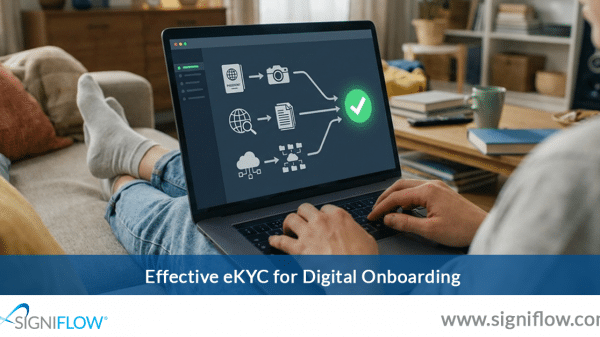







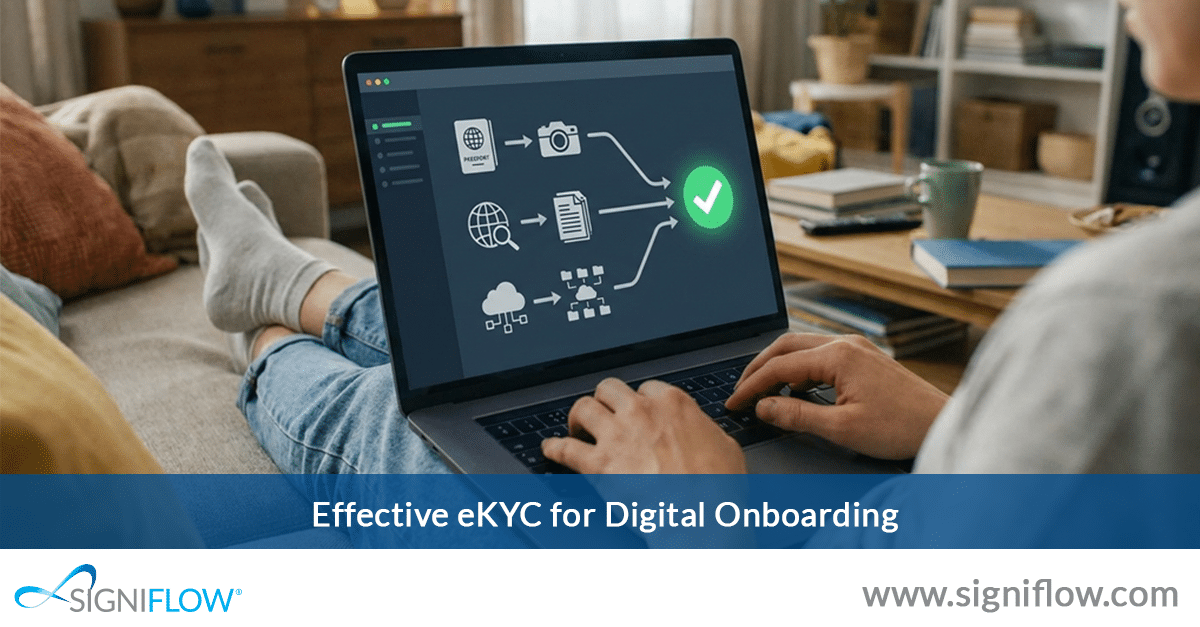
Effective eKYC for Digital Onboarding
Effective eKYC for Digital Onboarding becomes easier to understand when you picture a real application. A person submits their details and identity document from home, but the organisation receiving that application may need more than one answer before deciding whether onboarding can continue.
Effective eKYC for Digital Onboarding can bring together identity verification against an identity document, anti-money laundering checks and verification against relevant local data sources. Each check serves a different purpose, giving the organisation more useful information than an identity-document check alone.
eKYC is more than KYC moved onto a screen
Moving Know Your Customer checks online can make onboarding faster and more convenient, but digitising a single step does not automatically create a complete electronic Know Your Customer process.
An identity document helps establish who a person claims to be. It does not, by itself, provide every piece of information an organisation may need to assess that person in line with its own onboarding, risk and regulatory requirements.
A broader eKYC process brings together complementary checks so that the organisation can establish identity, identify relevant risk information and validate submitted details against sources available in the applicable country.
Three checks, three different purposes
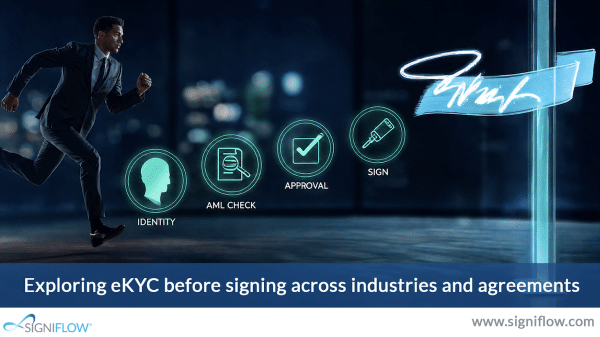
The value of eKYC becomes clearer when the process is separated into the questions each check is designed to answer:
- Does the individual’s information correspond with the identity document presented?
- Is there relevant information from an AML check that requires consideration?
- Can the submitted details be verified against appropriate local data sources?
These checks should not be treated as interchangeable. A successful identity-document check does not replace AML screening, and an AML result does not verify an identity document. Each contributes a different type of information to the onboarding decision.


What could this look like in practice?
Imagine a customer applying online for a new service. They enter their personal details and submit an identity document without needing to visit an office or send copies by email.
The identity-verification step compares the customer’s information with the document presented. An AML check then returns a possible name match. That result does not automatically mean the customer has done anything wrong; it tells the organisation that someone may need to review the match before the application proceeds.
If an appropriate local data source is available, another check can compare relevant submitted details with information available in that country. The organisation now has three different results to consider, each answering a different question.
The example shows why eKYC is a process rather than a single test. No one check tells the whole story, and an unclear result needs a sensible review path rather than an automatic assumption about the applicant.
Identity-document verification establishes a starting point
Identity verification compares the information supplied by an individual with the identity document presented during onboarding. This creates a foundation for the rest of the eKYC process by helping the organisation establish that the details being used belong together.
However, identity verification has a defined purpose. It should not be expected to answer separate questions about financial-crime risk or confirm every other detail supplied during an application.
The quality of the outcome also depends on factors such as the documents accepted, the information captured and how inconclusive or unsuccessful checks are handled. A clear alternative or review route is therefore an important part of the process.
AML checks add a different layer of information
An AML check is not another form of identity-document verification. It screens for relevant information that may need to be considered under an organisation’s customer due-diligence and risk policies.
A result should provide an input into a decision, not replace the decision itself. A possible match may require review, while an unclear result may need further investigation. Organisations should decide in advance who reviews these outcomes, what evidence is required and when an application should be escalated.
The correct approach depends on the organisation’s industry, risk exposure and legal obligations. The Financial Action Task Force’s guidance on digital identity likewise emphasises assessing whether digital identity systems are appropriately reliable in light of the risks involved.
Local data verification adds country-specific context
Verification against local data sources can help an organisation compare submitted information with relevant records available in a particular market. This provides an additional point of reference beyond the identity document itself.
The important qualification is that data availability is not uniform. Sources that are available in one country may not exist, contain the same information or be accessible in another. Organisations operating across several markets should therefore establish what can actually be verified in each jurisdiction.
Local verification should be described precisely. The existence of a check does not mean that every submitted detail has been confirmed, so onboarding teams need to understand what source was consulted, what information was compared and what the result means.
One process creates a clearer onboarding journey
When the three checks are managed separately, applicants may be asked for the same information more than once, teams may need to move results between systems and exceptions can become harder to follow.
Bringing the checks into a coordinated eKYC process creates a clearer sequence: collect the required information, perform the appropriate checks, review any exceptions and reach an onboarding decision. This can reduce unnecessary hand-offs while keeping each check’s purpose visible.
The goal is not simply speed. A well-designed process should also make it clear which checks were completed, which results require attention and what happens when a check cannot be completed successfully.
SigniFlow’s move from KYC to eKYC
SigniFlow’s capability has progressed from KYC to a built-in eKYC module. The development expands the onboarding process beyond identity verification alone by adding an AML check and verification against relevant local data sources where these are available.
Within the module, organisations can use identity verification against an identity document as the starting point and add the other checks required for their onboarding process. The appropriate configuration will depend on the organisation’s policies, risk profile, legal obligations and the data sources available in each country.
A stronger process starts with the right questions
An effective eKYC process does not rely on one check to do everything. It combines checks that serve different purposes and gives the organisation a clear way to interpret their results.
Before choosing a process, organisations should ask what they need to verify, which risks they need to consider, what information is available in each market and how exceptions will be handled. The answers determine which checks belong in the onboarding journey.
To learn more about SigniFlow’s built-in eKYC module, contact SigniFlow to arrange a demonstration and discuss the checks available for your requirements and markets.