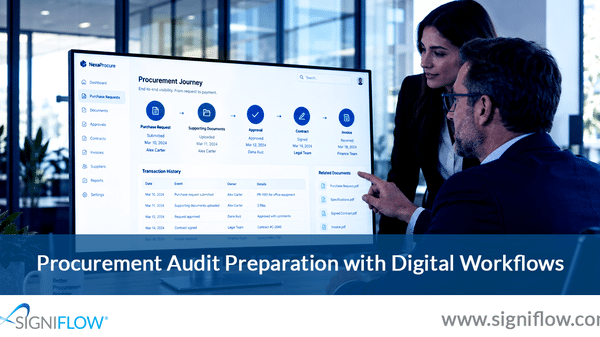





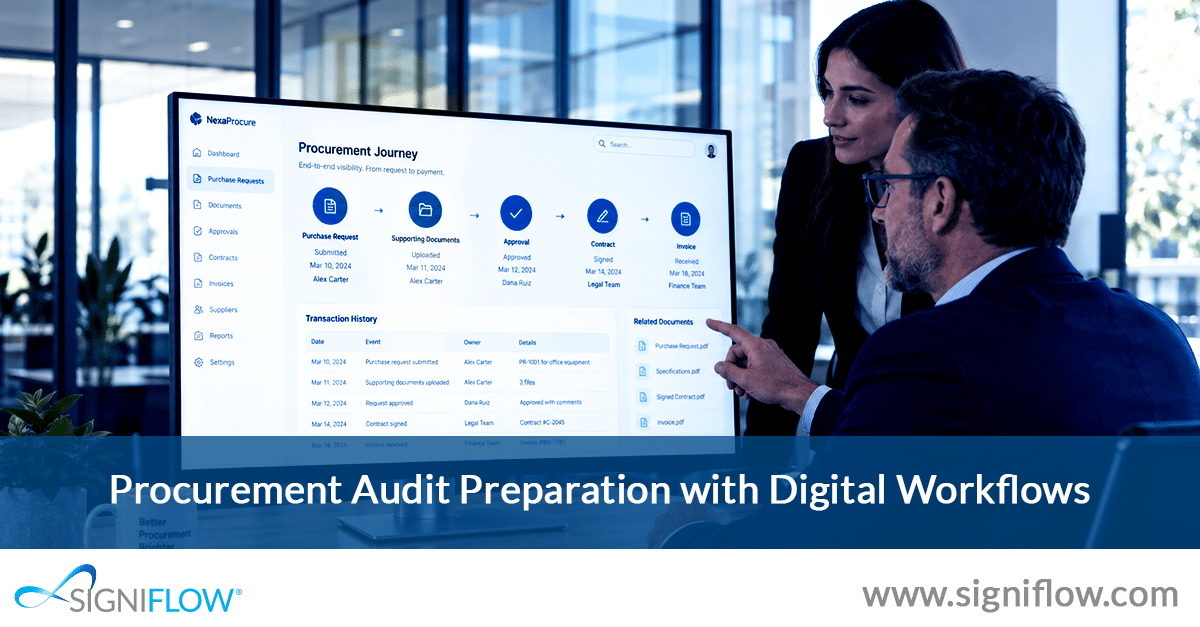
Procurement Audit Preparation with Digital Workflows
Procurement Audit Preparation with Digital Workflows means organising requests, decisions, approvals, contracts and supporting records while procurement work happens—not trying to reconstruct the story when an auditor asks for it. The workflow becomes the place where the evidence is created and connected.
Done well, Procurement Audit Preparation with Digital Workflows gives authorised teams a clearer view of who requested a purchase, which information supported the decision, who approved it and which final documents belong to the transaction. It does not replace procurement policy or professional judgement. It makes the everyday record easier to follow.
Audit pressure usually begins months before the audit
Audit day gets the blame because that is when the gaps become visible. The underlying problem often began when an approval was given in an email, a revised contract was saved to someone’s desktop, an invoice went to finance and the supporting document remained with procurement.
Each action may have been completed. The difficulty is proving how they connect.
That leaves procurement teams searching shared drives, asking colleagues for attachments and checking which version was approved. People who remember the history become essential to explaining the file. When they are unavailable, the record has to speak for itself—and often cannot.
A folder of documents is not yet an audit trail
An organised folder is helpful, but audit preparation involves more than collecting files. A reviewer may need to understand the sequence: what was requested, what changed, which version was considered, who had authority to approve it, when the approval happened and what was ultimately contracted or paid.
The European Court of Auditors’ public procurement audit toolkit illustrates the importance of documenting measures and decisions so progress can be followed and reviewed. Its checklist also asks whether electronic procedures are recorded well enough for the audit trail to be easy to follow.
That guidance is written for public procurement and is not a universal rule for every organisation. The operational principle travels well: the evidence should explain the transaction without relying on memory or a collection of disconnected screenshots.
Build the record as the purchase moves
The most useful time to organise procurement evidence is when the work is being performed. A connected workflow can bring the relevant actions and documents together under the same transaction or portfolio.
Depending on the organisation’s process, that record may include:
- the original request and business reason;
- quotations, tender documents or supplier information;
- evaluation or recommendation records;
- approval actions and timestamps;
- the version of the document that was approved;
- the signed agreement or purchase order;
- invoices, reconciliations and supporting delivery records; and
- later amendments, exceptions or renewed approvals.
Not every procurement requires the same evidence. The organisation’s policy, risk level, transaction type and jurisdiction determine what belongs in the record. Workflow design should enforce the approved process without pretending that one generic template fits every purchase.
Automation should expose exceptions, not hide them
Routine routing, reminders and status updates are good candidates for automation. They are repetitive, easy to overlook and expensive in employee attention. Automation can make it clearer that an action is waiting, completed or overdue.
The difficult decisions should remain visible to the people accountable for them. A changed scope, unusual supplier condition, approval outside delegated authority or missing supporting record may need human review. The workflow should make that exception apparent and direct it to the right person.
Audit readiness is therefore not the absence of human judgement. It is a record of where judgement was required, who exercised it and which information was available at the time.
How SigniFlow supports the everyday procurement record
SigniFlow’s procurement audit use case describes using digital Portfolios to keep signed contracts, invoices, reconciliations and supporting documents together. That creates a more coherent place from which authorised teams can retrieve the records required for audit work.
The same environment can support document routing, signatures and approvals as part of the normal procurement process. The point is not to manufacture an audit file at the end. It is to retain the relevant documents and workflow activity as work progresses.
SigniFlow does not replace auditors, procurement controls or the professionals responsible for approval decisions. Nor does an organised digital record guarantee compliance or a particular audit outcome. It can reduce the avoidable work of finding and reconnecting evidence that already existed but was stored in different places.
Test one completed procurement before changing everything
Choose a recent transaction and ask a colleague who did not manage it to reconstruct the story. Can they find the request, supporting information, decision, approval, final agreement and related financial documents? Can they tell which version was approved and whether later changes followed the required route?
Every point that requires an explanatory email, private folder or person’s memory is a useful design signal. It shows where documents need to be grouped, where routing should be clearer or where an approval event needs a better record.
This exercise also prevents teams from automating a process they have not fully understood. Start with the real work, including exceptions, before designing the digital route.
Make readiness part of the working day
The best procurement audit preparation happens quietly. Documents are grouped, approvals are recorded and supporting evidence stays connected because that is how the team works every day.
If your next audit will begin with inbox searches and requests for missing files, SigniFlow can help you map a digital document workflow around one of your procurement processes. Book a personalised demonstration to explore how the transaction could move from request to organised record.