







What are enterprise electronic signatures?
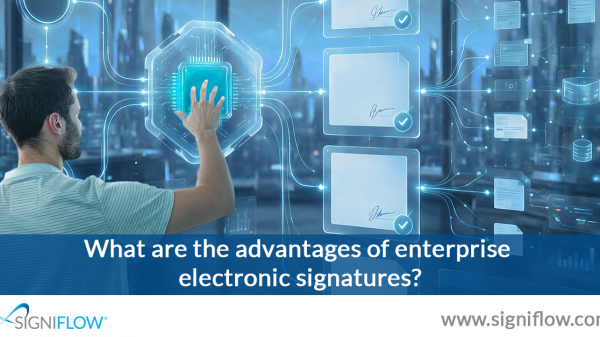
Enterprise electronic signatures are electronic signature solutions designed to support the complex requirements of large organisations. Unlike basic e-signature tools that focus primarily on collecting signatures, enterprise electronic signatures combine document signing with workflow automation, system integrations, governance, compliance, scalability, and flexible deployment options.
In simple terms, enterprise electronic signatures help organisations move documents securely through approval and signing processes while maintaining visibility, auditability, and control across the entire document lifecycle. They are built for businesses that manage high document volumes, multiple departments, regulated processes, and complex approval workflows.
How are enterprise electronic signatures different from basic electronic signatures?
Both enterprise and basic electronic signature solutions allow people to sign documents electronically. The difference lies in everything that happens before, during, and after the signature.
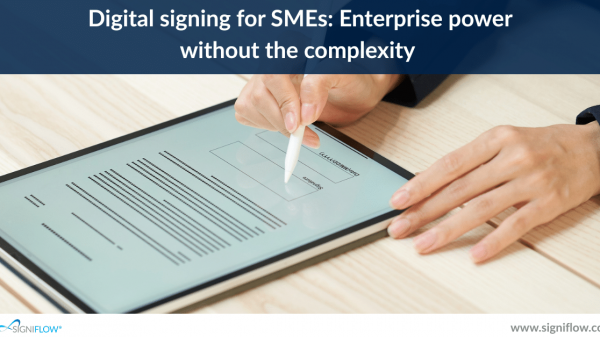
A basic electronic signature solution is often suitable for straightforward agreements between a small number of people. An enterprise platform is designed to become part of an organisation’s wider business infrastructure, supporting document routing, approvals, integrations, security policies, and compliance requirements.
As organisations grow, document processes become increasingly complex. Multiple stakeholders may need to review, approve, sign, archive, or trigger additional business processes before a transaction is complete. Enterprise electronic signatures help coordinate these activities through structured digital workflows.
What capabilities do enterprise electronic signatures provide?
Although capabilities differ between providers, enterprise electronic signature platforms commonly include:
Workflow automation
Documents can automatically move through predefined approval paths without relying on manual emails or paper-based processes. This reduces delays while improving visibility into where documents are within the approval cycle.
Integration with business systems
Enterprise platforms often integrate with CRM, ERP, HR, finance, procurement, and other core business applications. This allows signing activities to become part of existing business processes instead of operating as isolated tasks. (SigniFlow)
Compliance and governance
Many organisations operate under industry regulations that require document integrity, audit trails, authentication, and secure record keeping. Enterprise electronic signature platforms help organisations meet these governance requirements while maintaining complete transaction histories. (SigniFlow)
Scalability
Enterprise environments may process thousands of documents every day across multiple business units or countries. Enterprise electronic signatures are designed to support these high transaction volumes without compromising operational efficiency. (SigniFlow)
Flexible deployment
Different organisations have different infrastructure requirements. Some require cloud services, while others prefer hybrid or self-hosted deployments to align with internal security, governance, or data residency policies. Flexible deployment options allow organisations to choose an approach that fits their operational needs. (SigniFlow)
Who typically uses enterprise electronic signatures?
Enterprise electronic signatures are commonly used by organisations that manage complex document processes, including:
- Financial institutions
- Insurance companies
- Government organisations
- Healthcare providers
- Manufacturing businesses
- Legal departments
- Human resources teams
- Procurement and supply chain operations
These organisations often require multiple approvals, detailed audit records, regulatory compliance, and integration with existing business systems.
Why have enterprise electronic signatures become more important?
Digital transformation has changed how organisations work. Employees, customers, suppliers, and partners increasingly expect business to happen digitally, regardless of location.
Replacing paper signatures alone does not remove approval bottlenecks. Organisations also need better visibility, automation, and control over how documents move through their business. Enterprise electronic signatures address these wider operational challenges by supporting complete digital document workflows rather than simply replacing handwritten signatures.
How SigniFlow supports enterprise electronic signatures
For organisations that require more than a basic signing solution, SigniFlow provides enterprise electronic signature capabilities designed for complex business environments.
Its platform supports workflow automation, integrations with business applications, multiple deployment options including cloud, hybrid and self-hosted environments, and solutions that help organisations address governance, compliance, and data residency requirements. SigniFlow also provides digital signing capabilities for organisations requiring certificate-based digital signatures and high-volume automated signing services. (SigniFlow)
Rather than treating signing as an isolated task, SigniFlow enables organisations to incorporate electronic signatures into broader business processes, helping teams improve efficiency while maintaining operational control.
Choosing the right enterprise electronic signature platform
Selecting an enterprise electronic signature platform involves more than comparing signing features. Organisations should evaluate how well a solution supports their existing business processes, future growth, integration requirements, compliance obligations, and deployment preferences.
A platform that aligns with these broader business needs can become an important part of long-term digital transformation rather than simply replacing paper signatures.
Learn more about SigniFlow’s enterprise electronic signature and workflow automation solutions, or contact our team to discuss the right deployment option for your organisation.