






How SigniFlow Supports Procurement Audit Preparation
How SigniFlow Supports Procurement Audit Preparation is through connected document workflow, signing, approvals and organised digital records. SigniFlow can help procurement teams keep the documents and actions around a transaction together while the work takes place, instead of relying on a reconstruction exercise when an auditor asks for evidence.
SigniFlow supports the process around the record. It does not replace procurement policy, delegated authority, auditors or the professionals responsible for decisions, and it does not guarantee compliance or a particular audit outcome.
SigniFlow can route procurement documents
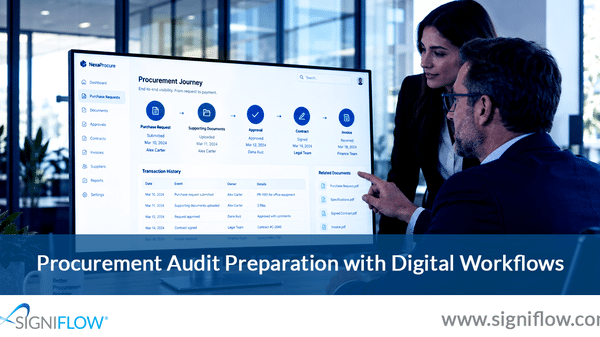
A procurement transaction may begin with a request and move through supporting information, evaluation, recommendation and approval before an agreement is signed. SigniFlow’s document workflow capabilities can route the relevant material to the next authorised participant and record actions taken within that route.
The organisation decides which steps, roles and exceptions belong in the process. The workflow provides a consistent path for those approved requirements.
Approvals remain linked to the relevant document
An approval has more value when the record shows who approved, when the action happened and which document or recommendation was presented. If the approval sits in an email thread while the final document sits elsewhere, the connection can be difficult to prove later.
SigniFlow can support approval workflows in which the action remains associated with the document route. This gives authorised users a clearer transaction history without turning software into the decision-maker.
Digital signing becomes part of the transaction
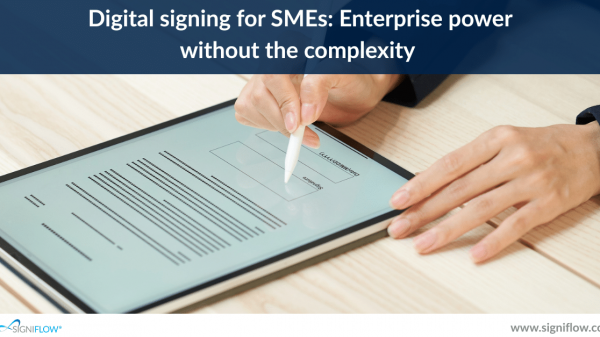
The signed contract or purchase order should not become detached from the request and approval that produced it. SigniFlow supports electronic signing within the document workflow, allowing the executed document to remain part of the same managed process.
The appropriate signing method, authority and review requirements still depend on the organisation’s policy, the document and the jurisdiction.
Portfolios can group the supporting record
SigniFlow’s procurement audit use case describes digital Portfolios that bring signed contracts, invoices, reconciliations and supporting documents together. The purpose is organised retrieval and better oversight of the material associated with procurement activity.
That record may also need later amendments, renewed approvals, delivery evidence or documented exceptions. What belongs in the Portfolio should follow the organisation’s approved process rather than a generic checklist.
The record should be understandable to a reviewer
The European Court of Auditors’ public procurement audit toolkit asks whether procurement measures and decisions are documented so progress can be followed and reviewed. It also asks whether electronic procedures are recorded well enough for the audit trail to be easy to follow.
The toolkit concerns public procurement and is not a universal rule. It does, however, describe the practical standard an organised record should meet: another authorised person should be able to follow the transaction without depending on private knowledge.
A SigniFlow discussion should begin with one transaction
Choose a completed procurement and map the request, supporting evidence, decision, approval, signed agreement, invoices and later changes. Identify every point where an employee had to forward an attachment, compare versions or ask someone what happened.
SigniFlow can help translate that real process into a connected document workflow with visible routing, approvals, signing and organised records. Book a personalised demonstration to examine one procurement journey with the team.